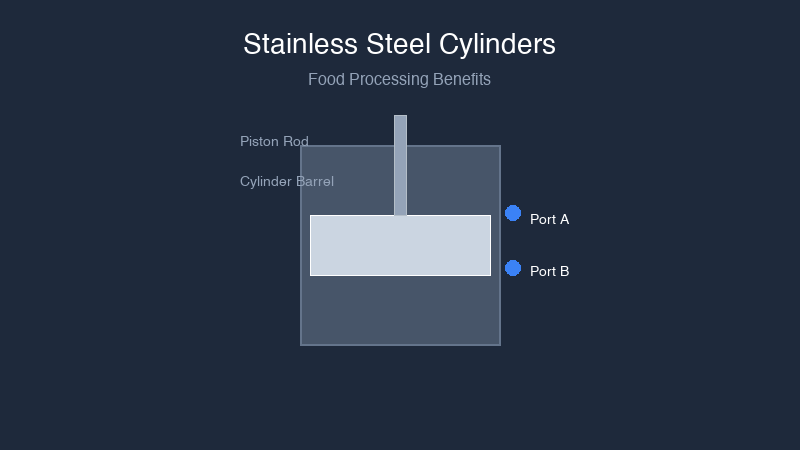
Food processing environments present one of the most demanding combinations of challenges for pneumatic equipment: high-pressure washdown with caustic cleaning agents, constant exposure to moisture, strict hygiene regulations, and the unforgiving economics of perishable product manufacturing. A pneumatic cylinder that fails prematurely in a meat processing plant or dairy facility does more than create a maintenance emergency—it can trigger a contamination event that shuts down an entire production line.
Stainless steel pneumatic cylinders have become the standard solution for food and beverage processing applications because they combine the corrosion resistance, cleanability, and regulatory compliance that these environments demand. Understanding why stainless steel outperforms standard aluminum or steel cylinders in these applications helps procurement managers and plant engineers specify the right equipment for their facilities.
Why Standard Cylinders Fail in Food Processing Environments
Standard industrial pneumatic cylinders—typically constructed from anodized aluminum or painted steel—are designed for factory automation environments with controlled atmosphere conditions. When introduced into a food processing plant, these materials encounter conditions they were never engineered to survive.
The high-humidity environment alone causes corrosion on painted steel components within months. Caustic cleaning agents—typically pH 10 to 12 solutions of sodium hydroxide or phosphoric acid—strip paint from component surfaces and attack the underlying metal. High-pressure washdown jets force moisture past seals and into internal chambers, causing internal corrosion that degrades performance before visible external damage appears. Steam cleaning and thermal sterilization cycles expose components to temperatures and pressures that exceed the ratings of standard seal compounds.
The cumulative effect is predictable: standard cylinders in food processing environments require replacement every 12 to 18 months under typical operating conditions. In facilities with aggressive cleaning protocols or high-temperature sterilization requirements, the interval shortens to 6 to 9 months. The maintenance cost and production downtime associated with this accelerated failure cycle creates a compelling economic case for specifying stainless steel cylinders from the start.
Five Advantages of Stainless Steel Pneumatic Cylinders in Food Processing
1. Superior Corrosion Resistance
Stainless steel grades 304 and 316 provide corrosion resistance that standard materials cannot match in food processing environments. Grade 304 stainless steel—the most common choice for non-direct food contact applications—resists the corrosive effects of routine washdown chemicals, high humidity, and temperature extremes that rapidly degrade painted or plated components. Grade 316 stainless steel adds molybdenum to its composition, providing additional resistance to chloride attack from salt-based cleaning agents and food ingredients like sodium chloride used in meat processing and dairy applications.
The corrosion resistance of stainless steel is not unlimited—improper care or exposure to highly concentrated acids or bleaches can cause surface staining and eventual corrosion—but compared to standard aluminum or painted steel, stainless steel extends cylinder service life by 3 to 5 times in typical food processing conditions.
2. Hygienic Design and Cleanability
Food safety regulations—including FDA 21 CFR Part 177 for food contact surfaces and EU Regulation EC 1935/2004—require that equipment surfaces in food processing environments be designed for complete cleaning. Stainless steel delivers this capability through a combination of surface finish options, geometric design, and material properties.
A polished stainless steel surface with Ra < 0.8 µm finish prevents bacterial adhesion and allows complete removal of organic residues during washdown. The smooth, non-porous surface does not harbor microorganisms in microscopic surface defects the way cast iron or painted surfaces do. Geometric design considerations—including smooth transitions at mounting surfaces, absence of crevices where product can accumulate, and accessible external surfaces—enable cleaning crews to sanitize the cylinder completely without disassembly.
3. Compliance with Food Safety Standards
Stainless steel pneumatic cylinders intended for food processing applications should carry documentation demonstrating compliance with relevant standards. Key certifications to verify include:
- FDA food contact compliance documentation for seal materials and external surfaces
- EU 1935/2004 compliance for European market food processing applications
- USDA accepted status for meat and poultry processing equipment
- 3-A Sanitary Standard 63-01 certification for pneumatic cylinders in sanitary applications
Working with a manufacturer that maintains current compliance documentation eliminates the risk of using non-compliant components in food processing equipment—a violation that can trigger regulatory action, product recalls, and damage to brand reputation.
4. Longevity in High-Harsh Environments
The total cost of ownership for stainless steel cylinders in food processing applications is lower than standard alternatives despite the higher initial purchase price. A stainless steel cylinder with a 5-year service life in a washdown environment costs less per year of operation than a standard aluminum cylinder requiring replacement every 12 to 18 months—including the maintenance labor, lost production time, and replacement parts costs associated with each failure cycle.
For facilities processing high-value products—specialty cheeses, premium cuts of meat, craft beverages—the cost of an unplanned production stoppage due to cylinder failure far exceeds the price premium of stainless steel equipment. The reliability advantage of stainless steel directly protects production revenue in these applications.
5. Temperature and Pressure Flexibility
Food processing applications frequently involve temperature extremes that exceed the operating range of standard seal compounds. Steam cleaning cycles reach 130 to 150°C in sanitize-in-place (SIP) procedures. Frozen food processing operates at -30°C or lower in cold storage areas. Stainless steel cylinders with appropriate high-temperature or low-temperature seal compounds handle these extremes without degradation that would destroy standard components.
The pressure ratings of stainless steel cylinders also exceed standard aluminum products in many configurations, providing additional safety margin in applications where pressure spikes occur during valve operation or system transients.
Choosing the Right Stainless Steel Grade
The selection of stainless steel grade depends on the specific food processing application and cleaning protocol.
Grade 304 Stainless Steel suits general food processing applications including bakery, beverage, and dairy processing where cleaning agents are moderate and direct food contact with the cylinder surface does not occur. Grade 304 provides excellent corrosion resistance at a lower cost than Grade 316.
Grade 316 Stainless Steel is required for applications involving chloride exposure—salt brine, seawater, acidic foods like tomatoes—and for equipment in direct food contact positions. The molybdenum addition in Grade 316 provides meaningful corrosion resistance improvement in these specific environments at a cost premium of approximately 20 to 30% over Grade 304.
Maintenance Advantages of Stainless Steel
Stainless steel cylinders require less maintenance intervention than standard alternatives in food processing environments. The corrosion-resistant surface eliminates the paint touch-up and surface treatment maintenance that painted steel components require. The material’s hardness resists impact damage from accidental collisions with equipment or product containers. Seal life extends because corrosive moisture cannot penetrate the internal chamber through corroded external surfaces.
A scheduled maintenance program for stainless steel cylinders focuses on seal replacement at appropriate intervals and verification of mounting integrity—rather than the extensive surface maintenance, corrosion treatment, and premature replacement that standard components require.
Frequently Asked Questions
Are stainless steel pneumatic cylinders more expensive than standard aluminum?
Yes, stainless steel cylinders typically cost 40 to 80% more than equivalent anodized aluminum models depending on the grade and configuration. However, when the total cost of ownership is calculated—including replacement parts, maintenance labor, and production downtime—the cost per year of operation is lower for stainless steel in food processing environments.
Can stainless steel cylinders be cleaned with high-pressure washdown?
Yes. Stainless steel cylinders rated for food processing applications are designed to withstand high-pressure washdown including high-temperature, high-pH cleaning solutions. However, avoid direct pressure wash at connections and fittings where water can be forced past seals into the internal chamber. Use food-grade lubricating oil on moving connections after washdown to prevent seizure.
What seal materials are used in stainless steel food processing cylinders?
Food processing cylinders use seal compounds approved for food contact—typically FDA-compliant nitrile (NBR) for standard applications, or Viton for high-temperature cycles. For steam cleaning applications, silicone or EPDM seals provide the required temperature resistance. Verify that seal materials are compatible with the specific cleaning agents used in your facility.
Do stainless steel cylinders require special mounting considerations?
Stainless steel cylinders follow standard mounting dimensions for ISO 15552 and ISO 6432 products, making them interchangeable with standard aluminum cylinders in most equipment designs. However, because stainless steel is denser than aluminum, verify that mounting hardware and brackets are rated for the increased weight—particularly for larger bore sizes.
Conclusion
Stainless steel pneumatic cylinders deliver compelling advantages in food processing environments where standard aluminum or painted steel products fail prematurely. The combination of corrosion resistance, cleanability, food safety compliance, and extended service life makes stainless steel the lowest-cost choice over the total life cycle of the equipment—even though the initial purchase price is higher.
Our food processing cylinder inventory includes Grade 304 and Grade 316 stainless steel models in standard bore sizes from 20mm to 100mm, with mounting configurations matching ISO 15552 dimensional requirements. Custom configurations for non-standard applications are available with typical lead times of 4 to 8 weeks.
Request Food Processing Cylinder Consultation | View Stainless Steel Cylinder Products | Browse Standard Cylinders